
Aggregates
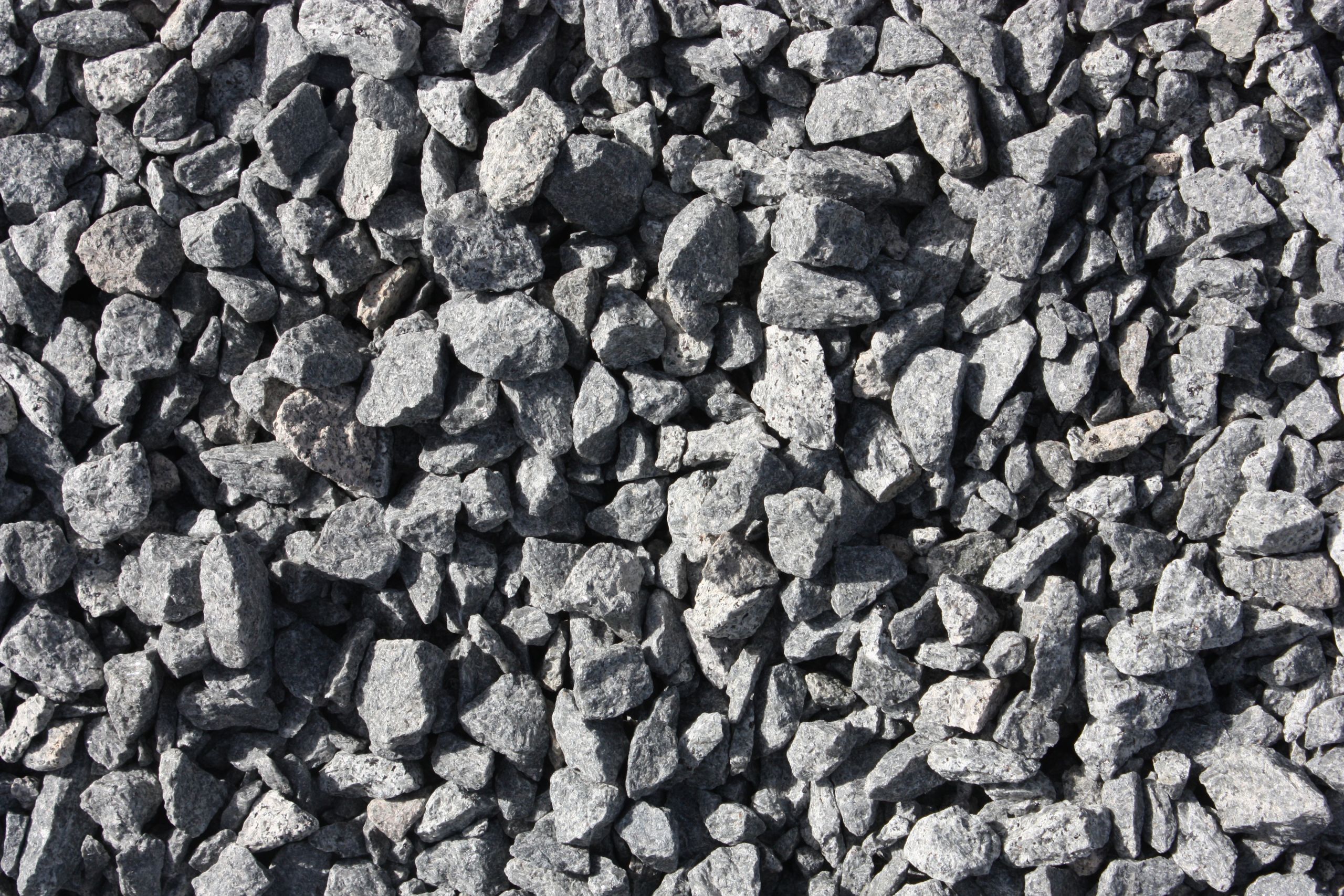
Whether you are laying pavers or erecting a retaining wall, or even if you are completing a landscaping project or site prep, we stock the aggregates you need… and we deliver! Contact us today to discuss your needs and arrange for bulk tote bag or truckload delivery!
Sand
Concrete Sand, Masonry Sand, and White Masonry Sand are all vital components in construction, but they differ significantly in their composition, properties, and ideal applications. We offer all three types in bulk tote bags or by the truckload to meet your specific needs.
Concrete Sand
Washed concrete / all-purpose sand
Concrete sand, often referred to as washed concrete sand or washed all-purpose sand, is a coarse aggregate primarily used in concrete mixtures. It's characterized by its:
- Coarse, Sharp Grains: The individual sand particles are angular and larger than those found in masonry sand, typically ranging from 0.02 to 0.19 inches (0.5 to 5 mm) in size. This angularity provides excellent interlocking capabilities within a concrete matrix.
- Washed Cleanliness: As the name suggests, concrete sand undergoes a washing process to remove impurities like silt, clay, and organic matter. This cleanliness is paramount because these fine particles can weaken the bond within concrete and lead to cracking.
- High Silica Content: It's generally composed of a high percentage of silica, contributing to its hardness and durability.
- Color Variation: The color can vary depending on the source quarry, often appearing in shades of gray, tan, or brown.
Primary Uses
- Concrete Production: This is its most significant application, providing bulk and strength to concrete for foundations, slabs, pavements, and precast concrete products.
- Asphalt Mixes: Used as a fine aggregate in asphalt for roads and driveways.
- Pipe Bedding: Provides a stable and permeable base for underground pipes.
- Drainage Systems: Can be used in certain drainage applications due to its good permeability.
Masonry Sand
Mortar / brick sand
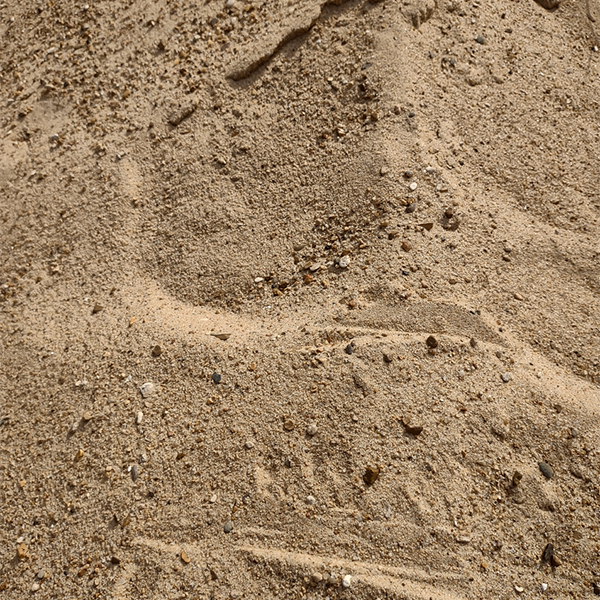
Masonry sand, also known as mortar sand or brick sand, is a finer, more consistent sand specifically designed for use in mortar and stucco applications. Key characteristics include:
- Fine, Uniform Grains: Unlike concrete sand, masonry sand has smaller, more rounded particles, typically ranging from 0.002 to 0.08 inches (0.05 to 2 mm). This consistent, fine texture is essential for creating a smooth, workable mortar.
- Controlled Sieve Analysis: Masonry sand is carefully screened to ensure a specific particle size distribution, which is critical for consistent mortar strength and workability.
- Minimal Impurities: While also washed, the focus is on removing very fine silts and clays that could compromise the bond of the mortar.
- Consistent Color: Often a light tan or off-white, though variations exist based on the geological source.
Primary Uses
- Mortar for Masonry: The primary use for laying bricks, blocks, and stones, providing the necessary bond and workability.
- Stucco and Plaster: Essential for achieving smooth finishes and good adhesion in stucco and plaster applications.
- Joint Sand for Pavers: Used to fill the joints between pavers, providing stability and flexibility.
- Volleyball Courts and Playgrounds: Its fine, soft texture makes it suitable for these recreational areas.
White Masonry Sand
Decorative, pure-white finish
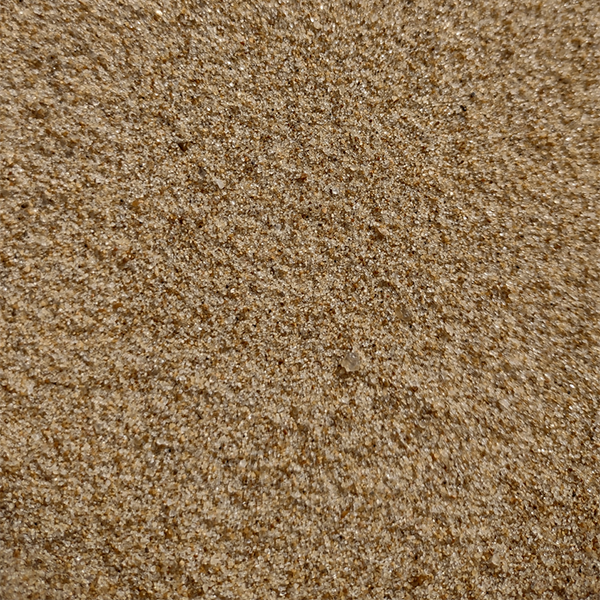
White masonry sand is a specialized type of masonry sand that shares many of the characteristics of standard masonry sand but with a distinct advantage: its color.
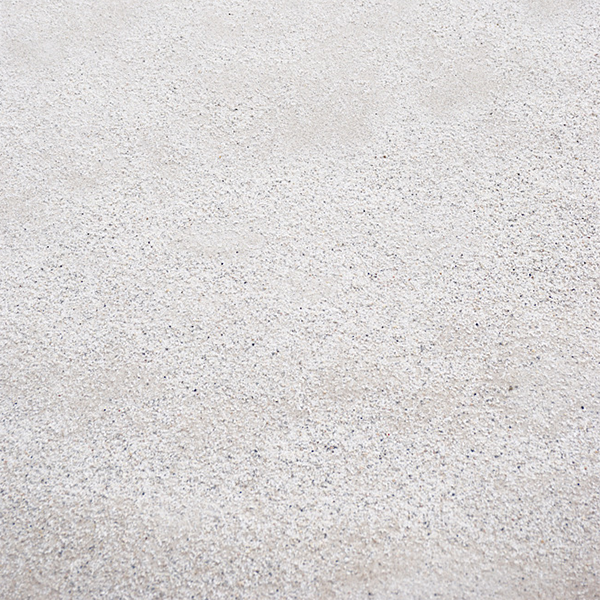
- Very Light to Pure White Color: This is its defining feature. The white color is achieved by sourcing sand from deposits naturally rich in pure silica and low in iron or other minerals that impart color.
- Fine, Uniform Grains: Like standard masonry sand, it possesses fine and uniform grains, ideal for smooth, workable mortar.
- Washed Cleanliness: It undergoes a rigorous washing process to maintain its pristine color and remove impurities.
Primary Uses
- Light-Colored Brickwork: Used with white, cream, or light-colored bricks to create a seamless and bright appearance.
- Architectural Stone: Enhances the look of light-colored natural or manufactured stone veneers.
- Specialty Stucco and Plaster: For a bright, clean finish in specific architectural designs.
- Grout for Tile: Can be used in some light-colored grout mixtures for a consistent appearance.
- Artificial Beaches and Landscaping: In high-end landscaping projects where a pure white sand is desired for visual impact.
Sand — Key Differences at a Glance
Choosing the correct type of sand is essential for the success and durability of your project. Contact us to determine the best product for your application.
| Feature | Concrete Sand | Masonry Sand | White Masonry Sand |
|---|---|---|---|
| Grain Size | Coarse, angular | Fine, uniform, more rounded | Fine, uniform, more rounded |
| Cleanliness | Washed to remove silts, clays, organics | Washed to remove fine silts, clays | Washed to ensure purity and color |
| Primary Use | Concrete, asphalt, pipe bedding | Mortar, stucco, joint sand | Decorative mortar, specialty finishes |
| Workability | Less important (for strength) | High workability (for smooth finishes) | High workability (for smooth finishes) |
| Color | Varies (gray, tan, brown) | Tan, off-white (variable) | Very light to pure white |
| Permeability | High | Low | Low |
Rock
Understanding the distinctions between common aggregates like #57 Stone, Class 4, 1/2-inch Class 1, and SB2 is crucial for selecting the right material for your construction or landscaping project. We offer all these products in bulk tote bags or by the truckload.
#57 Stone
AASHTO #57 / Washed #57
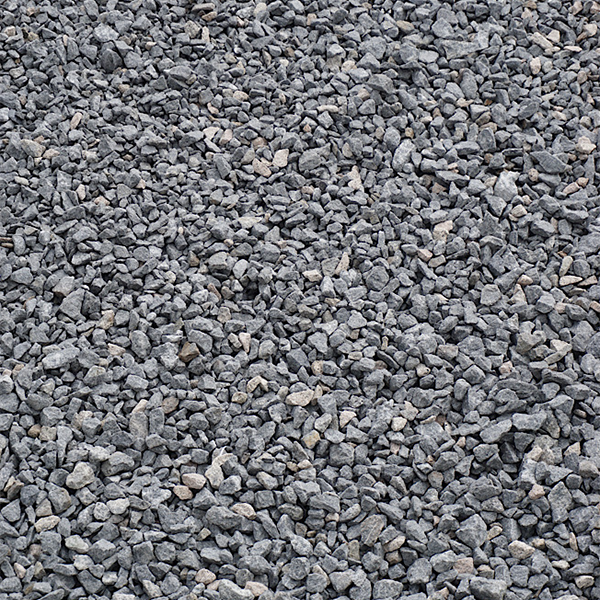
Crushed angular rock from 1/2" to 1" (12.5–25 mm), washed to remove fines. Highly permeable for excellent drainage and very durable.
Primary uses: concrete aggregate, asphalt mixes, drainage systems, driveway/road base, backfill, and railroad ballast.
Class 4
Dense Graded Aggregate / crusher run
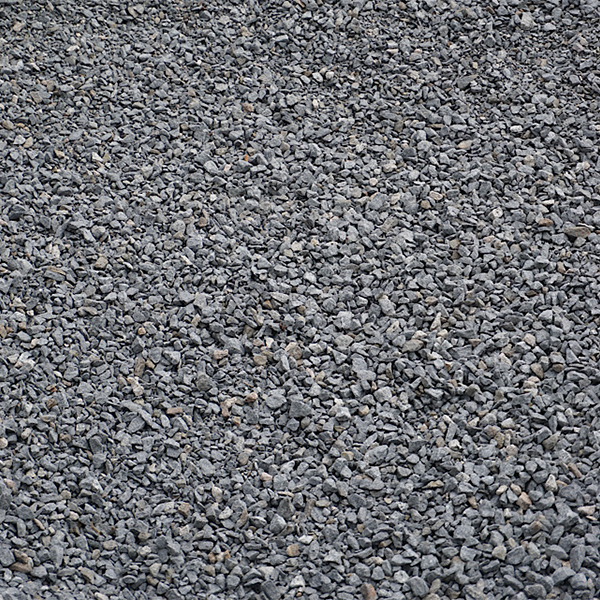
A blended, dense-graded material with a wide range of particle sizes (up to 1.5–2") down to fines, so it compacts tightly into a very stable layer. Not washed, and low permeability.
Primary uses: base material for roads, driveways, parking lots and foundations; sub-base; compacted structural fill.
1/2-inch Class 1
Also known as #8 Stone
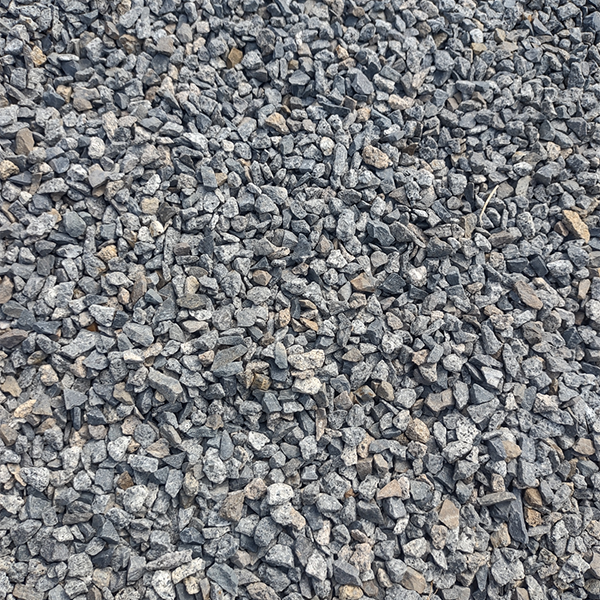
A finer washed crushed stone predominantly around 1/2" (12.5 mm), with fines removed. Highly permeable with a smoother, more finished appearance than #57.
Primary uses: French drains, pipe bedding, decorative stone and pathways, specialty ready-mix, asphalt topping.
SB2
Select Backfill 2 / Stabilized Base 2
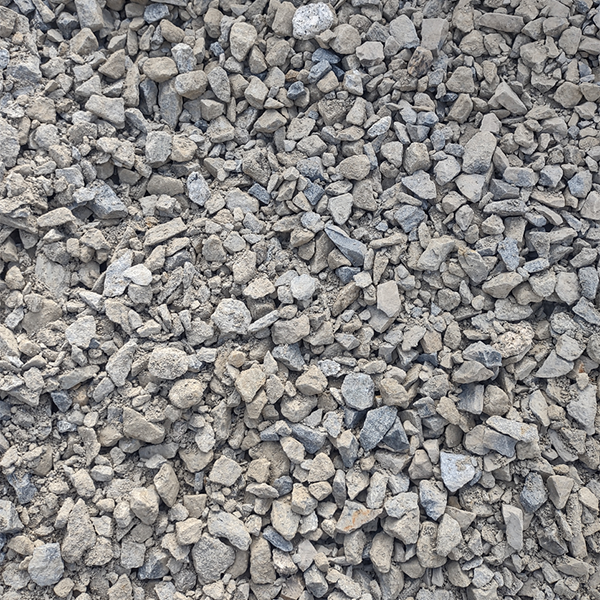
A well-graded, dense material similar to Class 4 but with stricter quality control — coarser, often up to 2"+, engineered to compact exceptionally well. Low permeability.
Primary uses: high-performance road base, building pads and foundations, structural fill, sub-ballast.
Rock — Key Differences at a Glance
Choosing the right aggregate is crucial for the success and longevity of your project. Contact us to select the ideal material and arrange bulk tote bag or truckload delivery.
| Feature | #57 Stone (AASHTO #57) | Class 4 (DGA) | 1/2-inch Class 1 (#8 Stone) | SB2 (Select Backfill 2) |
|---|---|---|---|---|
| Size Range | 1/2" to 1" (12.5mm–25mm) | Wide range (fines up to 1.5"–2") | Predominantly 1/2" (approx. 12.5mm) | Wide range (fines up to 2"+) |
| Fines Content | Very low (washed) | High (unwashed) | Very low (washed) | High (unwashed) |
| Permeability | High (excellent drainage) | Low (poor drainage) | High (excellent drainage) | Low (poor drainage) |
| Compaction | Poor (doesn't compact tightly) | Excellent (compacts densely) | Poor (doesn't compact tightly) | Excellent (compacts very densely) |
| Typical Use | Concrete, drainage, decorative | Road/driveway base, sub-base | Finer drainage, decorative | High-performance base, structural fill |
| Appearance | Uniform, angular, clean | Mixed sizes, dusty | Uniform, angular, clean, finer | Mixed sizes, robust |
Decorative Rock
Natural river rock and gravel offer a beautiful and versatile solution for various landscaping and construction needs. While all are naturally rounded and smooth, their differences in size and application are significant. We provide Oversized River Rock, Half-Inch River Rock, and Pea Gravel in bulk tote bags or by the truckload to perfectly match your project's requirements.
Oversized River Rock
Large River Rock / Cobbles
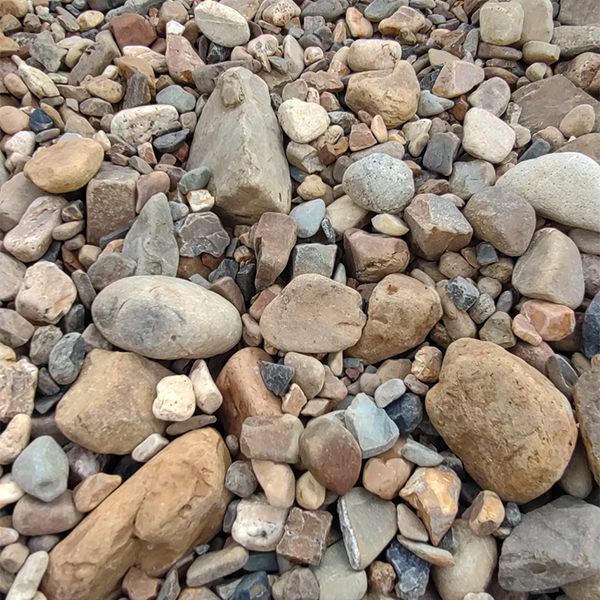
Oversized river rock, often referred to as large river rock or cobbles, is characterized by its substantial size. These rocks are naturally tumbled and smoothed by water over time, resulting in a rounded, aesthetic appearance.
- Size: The size can vary, but generally, oversized river rock ranges from 2 inches up to 10 inches or more in diameter. They are distinct large individual stones.
- Shape and Texture: Naturally rounded and smooth, often with an attractive, weathered appearance.
- Color: The color spectrum is broad, typically including shades of gray, brown, tan, red, and sometimes hints of green or blue, depending on the geological source. This natural variation adds visual interest.
- Weight: Due to their size, these rocks are heavy and less prone to shifting.
Primary Uses
- Decorative Landscaping: Ideal for creating bold statements in gardens, rock beds, and around trees.
- Erosion Control: Their weight and size make them excellent for stabilizing slopes, preventing soil erosion, and lining drainage channels or dry creek beds.
- Water Features: Popular for use in ponds, waterfalls, and other water features to create a natural aesthetic.
- Walkway Edging: Can be used to define borders for pathways, driveways, or garden beds.
- Gabion Baskets: Suitable for filling gabion baskets to create retaining walls or decorative structures.
- Accent Pieces: Used as standalone accent pieces in landscapes.
Half-Inch River Rock
Small River Rock / #8 River Rock
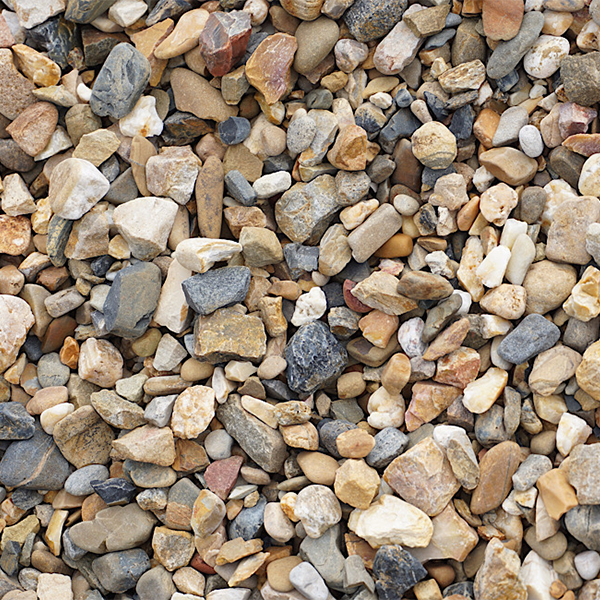
Half-inch river rock is a versatile, smaller-sized naturally rounded aggregate, often falling into classifications similar to #8 stone but with the characteristic smooth, rounded edges of river rock.
- Size: As the name suggests, the particles are primarily around 1/2 inch (approximately 12.5 mm) in diameter, with some slight variation.
- Shape and Texture: Consists of small, smooth, and naturally rounded stones.
- Color: Similar to oversized river rock, it displays a mix of natural colors, including various shades of gray, brown, tan, and sometimes lighter hues. The blend creates a natural, earthy look.
- Drainage: Its uniform size and rounded shape allow for good drainage.
Primary Uses
- Walkways and Patios: Often used as a decorative and permeable surface for pathways, patios, and outdoor living areas.
- Landscaping Beds: Excellent for ground cover in garden beds, around trees, and in planters, providing a clean, finished look while suppressing weeds and retaining moisture.
- Drainage Solutions: Suitable for French drains, pipe bedding, and general drainage systems where a finer, clean aggregate is needed.
- Decorative Accents: Can be used in fountains, small water features, or as a decorative topping.
- Pet Runs: Creates a clean, easily drainable surface for pet areas.
Pea Gravel
The smallest of the river rock family
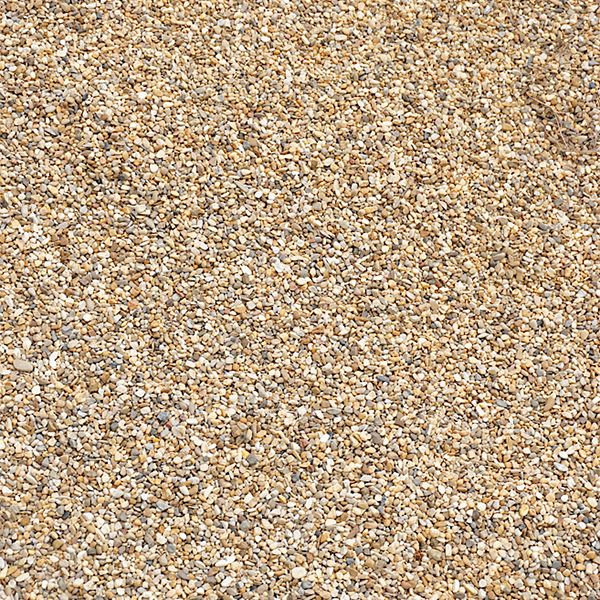
Pea gravel is the smallest of the river rock family, named for its resemblance in size to shelled peas. It is characterized by its very small, uniformly rounded particles.
- Size: Typically ranges from 1/8 inch to 3/8 inch (approximately 3 mm to 9.5 mm) in diameter.
- Shape and Texture: Very small, smooth, and well-rounded, making it comfortable to walk on.
- Color: Like other river rocks, pea gravel comes in a natural mix of colors, often including muted tones of brown, tan, gray, and white, creating a speckled appearance.
- Compaction: While it doesn't "lock" together like angular crushed stone, its small size allows it to settle and form a relatively stable, yet permeable, surface.
Primary Uses
- Pathways and Patios: Extremely popular for permeable pathways, driveways, and patios due to its pleasant texture underfoot and excellent drainage.
- Playgrounds: Often used as a soft, impact-absorbing surface beneath playground equipment.
- Decorative Ground Cover: Ideal for garden beds, tree surrounds, and as a decorative mulch. It helps with weed suppression and moisture retention.
- Aquariums and Ponds: Its small size and smooth texture make it suitable for use as a substrate in large aquariums or the bottom of garden ponds.
- French Drains: Can be used in smaller French drain applications where a very fine, permeable aggregate is needed.
- Dog Runs/Kennels: Provides a clean, drainable, and relatively soft surface for pet areas.
Decorative Rock — Key Differences at a Glance
Choosing the right river rock or gravel depends on your project's aesthetic goals, functional requirements, and budget. Contact us today to discuss your project and arrange for bulk tote bag or truckload delivery!
| Feature | Oversized River Rock (Cobbles) | Half-Inch River Rock (Small River Rock) | Pea Gravel |
|---|---|---|---|
| Size Range | 2" to 10"+ (Large individual stones) | ~1/2" (approx. 12.5mm) | 1/8" to 3/8" (approx. 3mm – 9.5mm) |
| Primary Use | Decorative accents, erosion control | Walkways, landscaping beds, drainage | Pathways, playgrounds, decorative mulch |
| Texture | Large, smooth, rounded | Small, smooth, rounded | Very small, smooth, rounded |
| Walkability | Not for walking surfaces | Good for walking surfaces | Excellent for walking surfaces |
| Compaction | Poor (individual large stones) | Poor (doesn't interlock) | Settles, but remains permeable |
| Visual Impact | Bold, statement-making | Natural, subtle, refined | Fine, speckled, soft |